
When a book stops being just reading material and evolves into a practical guide for leadership, it begins to shape the way we operate.
A certain kind of bookshelf doesn't announce itself as influential. It doesn't sit there labeled as “inspiration” or “career reading.” It hits differently. It shows up quietly, in the way someone answers a message they aren't quite ready for yet. In the pause before they agree to something. In whether they say yes out of habit or no out of genuine clarity.
The executive bookshelf today is less about the books themselves and more about what actually sticks once you’re done reading. It lives in the middle of decision fatigue, the need for emotional restraint, ambition, hesitation, and the messy process of recalibration. You find it in ordinary life far more often than you find it in the stiff language of corporate leadership.
The Architecture of Transition

In her book, The Next Day: Transitions, Change, and Moving Forward, Melinda French Gates offers a raw look at how we evolve. As the official discussion guide notes, she describes the "next day" as a critical period where we start making choices—often without realizing it—about how we’ll handle change, what we’re going to carry forward, and what we’re leaving behind. She explains that this is when we begin sketching out the next version of ourselves, opening up space for new ideas, new people, and fresh possibilities. She adds that this space is valuable in its own right; transitions inevitably create clearings that require time, reflection, and real readiness for whatever comes next.
Through this lens, she hits on the importance of being intentional and protecting that space during a transition. By framing these moments as opportunities for growth instead of just endings, she pushes for a mindset that views change as a necessary path to renewal and personal growth.
In real life, this kind of shift rarely feels like a “big transformation moment.” It’s much quieter. It’s someone who leaves a job and doesn't feel the need to broadcast their next move immediately. It’s the choice not to rush into replacing one structure with another. It’s sitting with a slower morning for a few weeks without trying to fix it or turn it into a problem.
It can also look like saying no to back-to-back commitments after you’ve burned out, even when saying yes would be the path of least resistance. Or deciding not to give a full, detailed explanation of a life shift to everyone who asks. The “next day” becomes less about the change itself and more about how much space you give yourself after the dust settles.
Even the small stuff reflects this: not replying to every email the second it hits your inbox, not filling every moment of silence with noise, and not turning every transition into a project to be optimized.
The Internal Inventory of Leadership
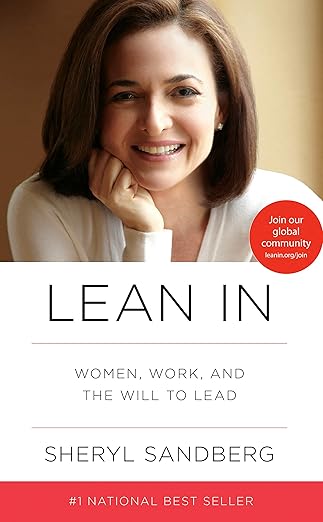
In Lean In: Women, Work, and the Will to Lead, Sheryl Sandberg pulls the camera back from her own story to focus on the reader’s internal inventory. As the Lean In Discussion Guide for All Audiences highlights, she invites us to take a hard look at our pasts, reflecting on how we were treated as kids and how that communicated expectations about who we should be and what we’re worth.
She pushes for an exploration of how gendered beliefs and societal pressure shape what we’re encouraged to do—or discouraged from doing—and how those frameworks define what we think is even possible for us. The guide also asks readers to dig up those moments when gender norms, like the old assumption that some jobs are just for men or just for women, steered their life decisions and shaped their paths.
In our daily lives, this rarely feels like academic theory. It shows up in micro-behaviors that feel intensely personal but are actually structural.
It’s a woman getting ready to speak in a meeting, going over a sentence in her head three times before she lets it out. It’s the hesitation before correcting someone—not because she’s confused, but because she’s weighing how she’ll be perceived. It’s undercharging for work because she knows her confidence and her pricing don't always sync up.
It shows up in private moments, too: picking a “safer” career path, not because she lacks ability, but because of what she’s been conditioned to expect. Or keeping an ambition quiet and small before sharing it, just in case it sounds “too much.”
Over time, these aren't just one-off events. They’re patterns that quietly narrow your lane.
Building Ownership Without Permission

In a reflection shared on her platform, Cara Alwill explores the jump from needing outside validation to finding her own agency, pointing to her self-published book Girl Code as the turning point. She describes it as more than a book; it was a movement built on her belief in women, collaboration, and shared success. Her whole philosophy centers on the idea that women do better when they support themselves and each other, and that collective ambition, friendship, and success hit harder when you swap competition for collaboration.
By positioning Girl Code as a global hit that didn't need the permission of traditional publishing gatekeepers, Alwill shows what’s possible when you bypass the old systems. She makes a strong case for how modern creators can ignore conventional validation and build real intellectual and commercial assets using nothing but their own voice—with an impact that keeps rippling long after the launch.
In the real world, this mindset usually kicks in well before you feel sure of yourself. It’s someone launching a newsletter before they feel “qualified” to call themselves a writer. It’s an entrepreneur launching a beta version of a product while still working out the bugs. It’s building something in public while you’re still privately trying to figure out how it’s going to evolve.
You see it in smaller, quieter places: women passing opportunities back and forth in group chats, sliding client leads to friends without needing anything in return, and recommending each other without playing the comparison game. That isn't always calculated strategy. It’s more like instinct. And over time, that’s exactly what changes the landscape of ownership.
Leadership as Behavior in Small Moments
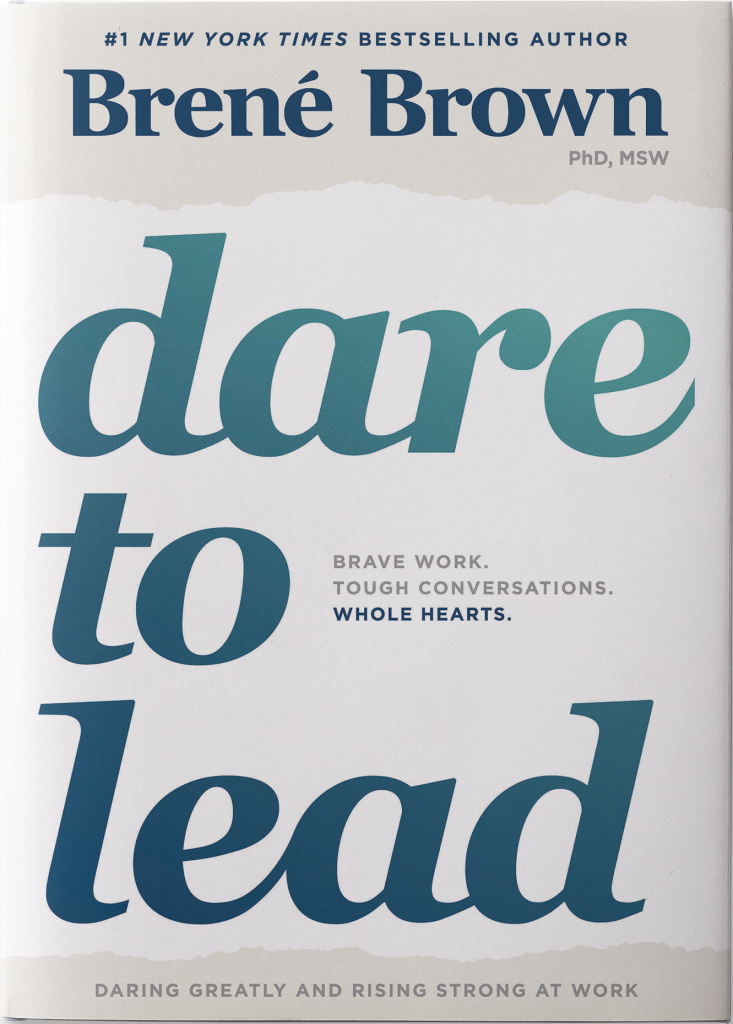
In Dare to Lead, Brené Brown defines a leader as anyone who takes responsibility for finding the potential in people and processes and has the courage to actually develop that potential.
Brown frames "daring leadership" as a practice built on curiosity, not certainty. Leaders here aren't the ones who act like they have all the answers; they’re the ones who stay curious and keep asking better questions. She stresses that power isn't a finite resource you hoard, but something that grows when you share it. Instead of dodging the hard conversations, she argues that real leadership means leaning into vulnerability whenever it’s necessary to do work that actually matters.
She also notes that in a culture fueled by scarcity, fear, and uncertainty, being a daring leader requires building real skills around human traits. She points out the irony that we’re neglecting the development of emotional and cognitive capacity in leaders just when AI and machines are getting better at the technical tasks. In this light, empathy, connection, and courage aren't just "soft skills"—they’re the foundational human strengths that leadership can't survive without.
In a real office, this rarely looks like a dramatic movie moment. It’s someone choosing to handle tension directly rather than letting it fester in the silence. It’s a manager giving feedback early instead of waiting for a formal review cycle. It’s a teammate asking for a quick clarification instead of just nodding along like they understand everything.
You see it in how emails read, too. A tone that doesn't escalate things for no reason. A choice to stop adding pressure when clarity is already there. A moment of honesty that doesn't need to be softened into ambiguity. These aren't "leadership moments" you’d find in a textbook; they’re maintenance behaviors. And yet, they shape a company’s culture way more than any strategy document ever could.
What the Executive Bookshelf Actually Does
Look across all these works, and you start to see a pattern, even if the authors don't explicitly spell it out. They aren't just selling ideas about transition, identity, agency, or leadership. It’s not about grand, dramatic "leadership moments." It’s about how quickly someone responds. How much space they allow themselves before they react. What they’re willing to tolerate. What they stop feeling the need to explain. What they start noticing about themselves mid-action. The pause before saying yes. The refusal to fill every silence. The shift in how they decide what’s actually urgent.
This is where the executive bookshelf really exists. It’s not in the reading itself. Every book is just a personal training ground, built on the writer’s own life experiences.
Leadership, Personal Development, Mindset