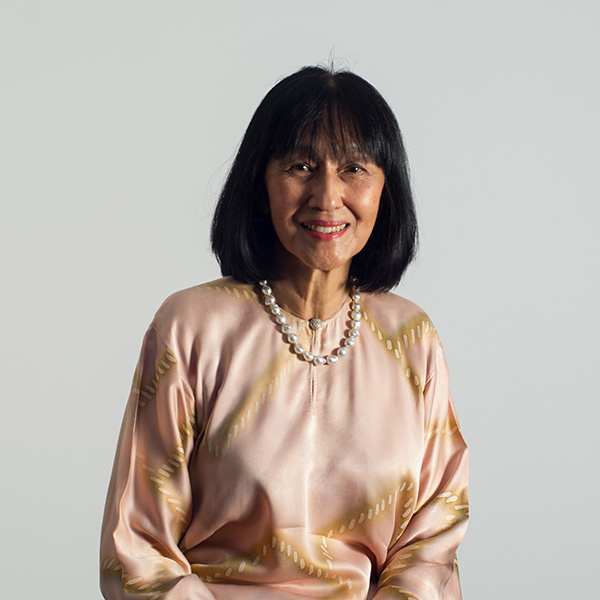
As economic uncertainty reshapes Southeast Asia’s corporate landscape, more women are stepping into influential leadership roles across Malaysia’s banking, investment, governance, and real estate sectors.
There was a time when authority inside Southeast Asia’s corporate world carried a certain predictability. The same institutions, the same board structures, the same leadership circles often moved quietly behind closed doors while markets around them changed at a slower pace. That atmosphere no longer exists. Across Malaysia today, boardrooms are operating in an environment where economic pressure, political uncertainty, digital acceleration, and public scrutiny arrive all at once, often without warning.
The people leading those institutions are being forced to adapt accordingly. In banking, investment, infrastructure, and large corporate groups, leadership now depends less on visibility and more on whether organisations can hold stability under pressure. This is one reason the growing presence of women in senior executive and board-level positions across Malaysia feels less like a symbolic shift and more like part of a wider restructuring taking place inside corporate leadership itself.
The pressure on institutions globally has intensified over the last few years. Inflation shocks, geopolitical fragmentation, supply-chain instability, and increasingly fragile investor confidence have changed the tone of decision-making at the highest levels. Businesses are no longer operating in conditions where long-term assumptions feel guaranteed.
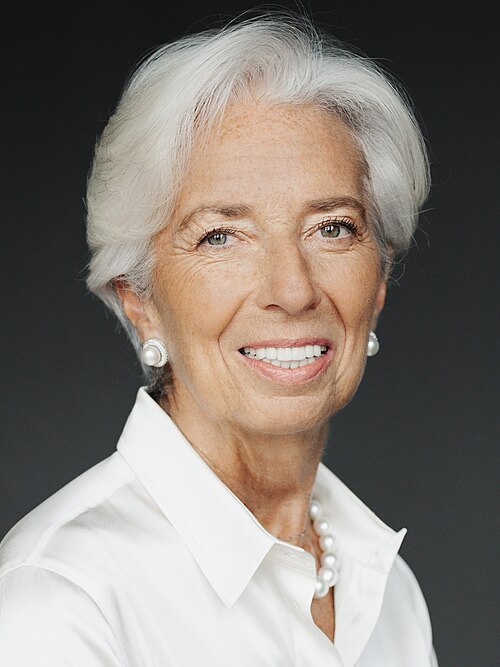
At the 28th meeting of Francophone Central Bank Governors in Phnom Penh, Christine Lagarde, President of the European Central Bank, spoke directly about the fragility of institutional trust during uncertain times. She stated that to best serve the public interest, a central bank must be close enough to the state – but independent enough to resist the pressures of the moment.
Lagarde further noted that it is precisely when monetary policy decisions are politically fraught and economically costly that credibility is most needed. And it is also when credibility is hardest to keep. She added that the anchoring of inflation expectations depends on households being convinced that the central bank will do what it says. According to Lagarde, this conviction is built less by words than by accumulated experience - the sense that commitments, once made, are consistently kept.
Perhaps the most striking line from Lagarde’s address came near the end of her remarks: the lesson of history is clear: it takes time to build trust, but only an instant to lose it.
This is the new reality for corporate bosses, too. Institutions live or die by their credibility when the market goes haywire or a tough choice becomes unpopular. Inside the boardroom, credibility is the one currency that actually matters. Investors want consistency, clear rules, and honesty when things get rough. Trust takes years to build and seconds to kill.
The job of a director has outgrown simple oversight. You have to handle economic, tech, political, and reputational risks simultaneously.
Tan Sri Zarinah Anwar, Chairman of the Institute of Corporate Directors Malaysia (ICDM), acknowledged this changing reality in a press statement regarding organisational milestones. She noted that the mandate for board directors as leaders is clear – navigate this complex environment, deliver positive impact, optimise opportunities, promote equity, and foster innovation. She further noted that at ICDM, they recognise the challenges and complexity of the board’s multi-faceted role and the need for a proactive approach towards tackling change and problem-solving.
The way we talk about leadership in Southeast Asia is shifting. Terms like resilience, accountability, and institutional trust aren't just report-fillers anymore—they are how an organization stays alive. The growing number of women in these top spots across Malaysia’s banking, investment, and governance sectors is the clearest sign of this real, deep-seated change.