We as parents often focus on academic milestones and formal schooling for our child, while the real architecture of human development is built long before a child enters the traditional classroom. However, in the current day and age, early childhood development is reduced to day care and basic alphabet worksheets.
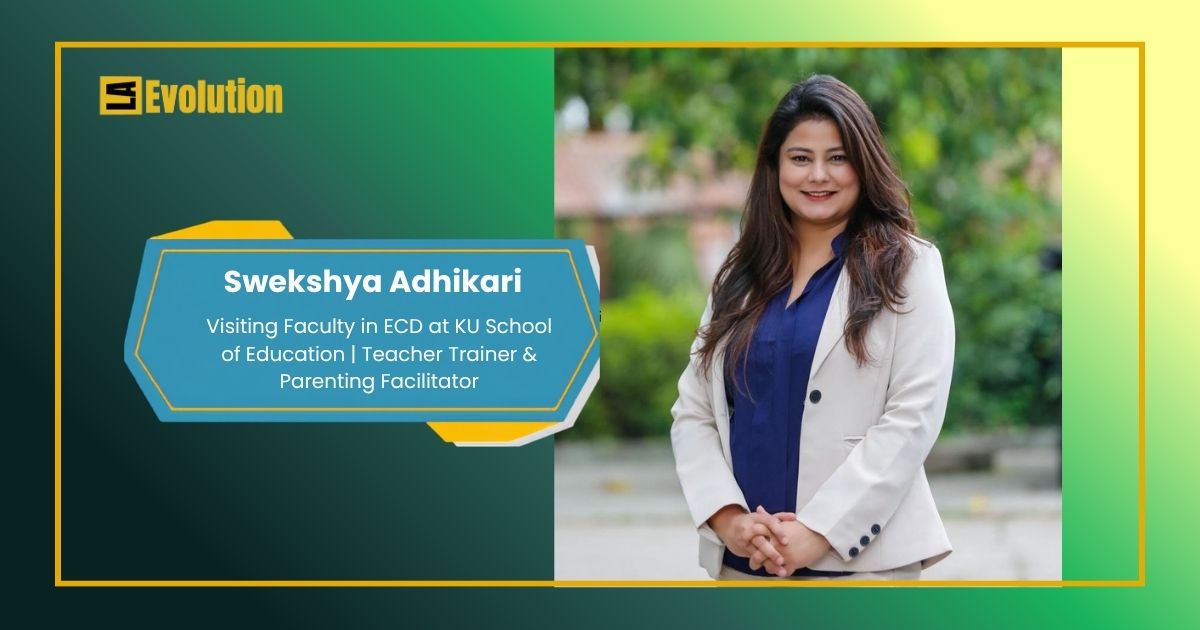
True foundational learning goes far beyond surface-level academia, which is focused on physical and motor growth, brain and cognitive development, social and emotional well-being, and language & communications. To explore the critical role of early childhood development, misconceptions, everyday classroom challenges and the future of modern education, Pramisha Maharjan sat down with Swekshya Adhikari for a candid conversation.
Swekshya Adhikari is a visiting faculty member at Kathmandu University School of Education, teaching in the Master’s in Early Childhood Development (ECD) cohort. Alongside that, she works independently as a teacher trainer with ECD and primary-level teachers and runs parenting sessions. Her starting point is a gap she keeps meeting in peri-urban ECD classrooms: teachers know exactly what activity to run on a given morning but have not been given the 'why' or the 'how' underneath it, so the activity happens and the learning does not necessarily follow. Most of her work sits in closing that gap, whether with a master's cohort, a school staffroom, or a room full of parents, because she takes teacher capacity and teacher wellbeing to be the conditions on which everything else in a classroom depends. She has published on Nepal's decision to abolish examinations up to Grade 5, arguing that the reform reflects thin assessment literacy rather than better pedagogy. She is passionate about all things teaching and learning and writes for parents and practitioners on LinkedIn, mostly taking apart the education myths that circulate as common sense.
In this exclusive Q&A, Adhikari shares her expert insights on why early childhood matters more than ever in today's scenario, how to overcome systemic gaps in the classroom, and why teacher wellbeing is the precondition for everything else.
Q n A
Pramisha Maharjan: Tell us about your journey into academia.
Swekshya Adhikari: I took the long way round. I started in mass communication and journalism, moved to marketing for my bachelor's at the University of Wales, then did an MBA at the University of Technology Sydney, and I am now doing an MPhil in ECD at Kathmandu University. The jobs in between were just as scattered: receptionist at my own college at sixteen, business development officer and later manager at educational institutions, documentary work for organisations like the British Council, professional and peer tutor at UTS, and several years training primary teachers. Varied roles, but every one of them inside the education sector; that is what destiny is, I suppose. When I came back to Kathmandu from Sydney I actually meant to research business opportunities and eventually start something of my own. What changed it was meeting Umes Shrestha sir in June 2024. I started attending his monthly Empowering Hours sessions at King's College, got the itch to teach, and after that I could not wait to get inside a classroom and start.
Pramisha Maharjan: What inspired you to specialize in your field?
Swekshya Adhikari: Foundations, really. Years of training primary teachers taught me that you cannot fix something that is already broken at the base; by the time a child arrives in Grade 1 with gaps, you are repairing rather than building. So the beginning has to be the beginning. Living in Sydney sharpened that, because early childhood is given serious attention there, and the idea stayed prominent in my head long after I came home.