
When women gain control of money, they gain control of choices, opportunities and the future they want to build.
A generation ago, a woman in Africa could run a thriving business and still struggle to convince a bank that she was creditworthy. She might have loyal customers, steady income and years of trading experience. What she often lacked was documentation. No formal transaction history. No established relationship with a financial institution. No record that fit neatly into the systems used to evaluate risk.
Across Africa, that reality excluded millions of women from opportunities to grow their businesses. Today, a mobile phone is changing some of those calculations. The rise of mobile money has created something many women never had before: visibility. A payment made digitally leaves a record. A record becomes a financial history. Over time, that history can become access to savings products, loans and other financial services. In other words, technology is doing something traditional banking often failed to do. It is recognising economic activity that already existed.
During the 2019 Global Gender Summit, then African Development Bank President Akinwumi Adesina stated that the perceived risk in lending to women is a structural myth rather than a fiscal reality. Adesina noted that around 90 per cent of female borrowers repay their loans without issue, arguing that the banking sector must move beyond outdated prejudices and institutional rigidity to expand women's access to capital.
The significance of that observation is hard to ignore. For years, discussions about women and finance often centred on limitations. Adesina's remarks point in another direction. The issue is not whether women can manage capital. The evidence suggests they already do. Yet optimism should not obscure reality. For every woman benefiting from digital finance, many more remain outside the system.
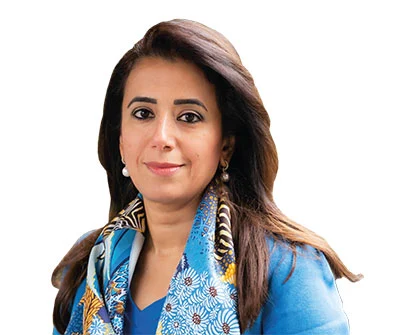
Hanan Morsy, Deputy Executive Secretary (Programme) and Chief Economist at ECA, speaking during a ministerial dialogue on urgent action to boost women's financial inclusion for Africa's growth, warned that progress on women's economic empowerment continues to fall short despite recent gains. She highlighted that approximately 89 per cent of women in Africa are in informal employment, with limited access to social protection or financial services, while the digital economy is currently worsening exclusion.
Morsy stated that closing gender gaps could boost economic growth, but warned that the ability to measure these losses remains constrained by serious data gaps. She noted that insufficient measurement leads to an undervaluation of both the cost of exclusion and the benefits of reform, adding that without gender-responsive data, policymakers are effectively making decisions with only partial sight. She further stated that aligning financial reforms with the realities of women's lives would not only advance equality but also unlock a powerful engine of productivity, resilience and inclusive growth across Africa.
Perhaps the most interesting aspect of this story is that it is not really about fintech. Fintech is simply the mechanism. The deeper story is about recognition. Women have always participated in African economies. What is changing is that financial systems are becoming better at recognising their contribution. And when people become visible to economic institutions, new possibilities tend to follow.

-(1).webp)